
Learning the difference can make an unfamiliar deck feel more approachable. Before memorizing individual meanings, you can start by recognizing which group a card belongs to and the themes it introduces.
What Is the Major Arcana?
The Major Arcana includes cards such as the Fool, the High Priestess, the Lovers, and the World. In many popular decks, these cards are numbered from 0 to XXI, although their order and names can vary between traditions.
They are commonly associated with themes such as identity, change, relationships, responsibility, and personal growth.
For example:
- The Fool: Beginnings, curiosity, and stepping into the unfamiliar.
- The High Priestess: Intuition, observation, and what remains unspoken.
- The Lovers: Connection, values, and meaningful choices.
- Death: Endings, transition, and making room for change.
- The World: Completion, integration, and reaching a milestone.
These themes are symbolic. Drawing Death, for instance, does not establish that a literal death will occur. Its traditional associations offer a way to reflect on endings and transitions within the context of your question.
What Is the Minor Arcana?
The Minor Arcana brings attention to the experiences that shape daily life: conversations, feelings, responsibilities, efforts, and decisions.
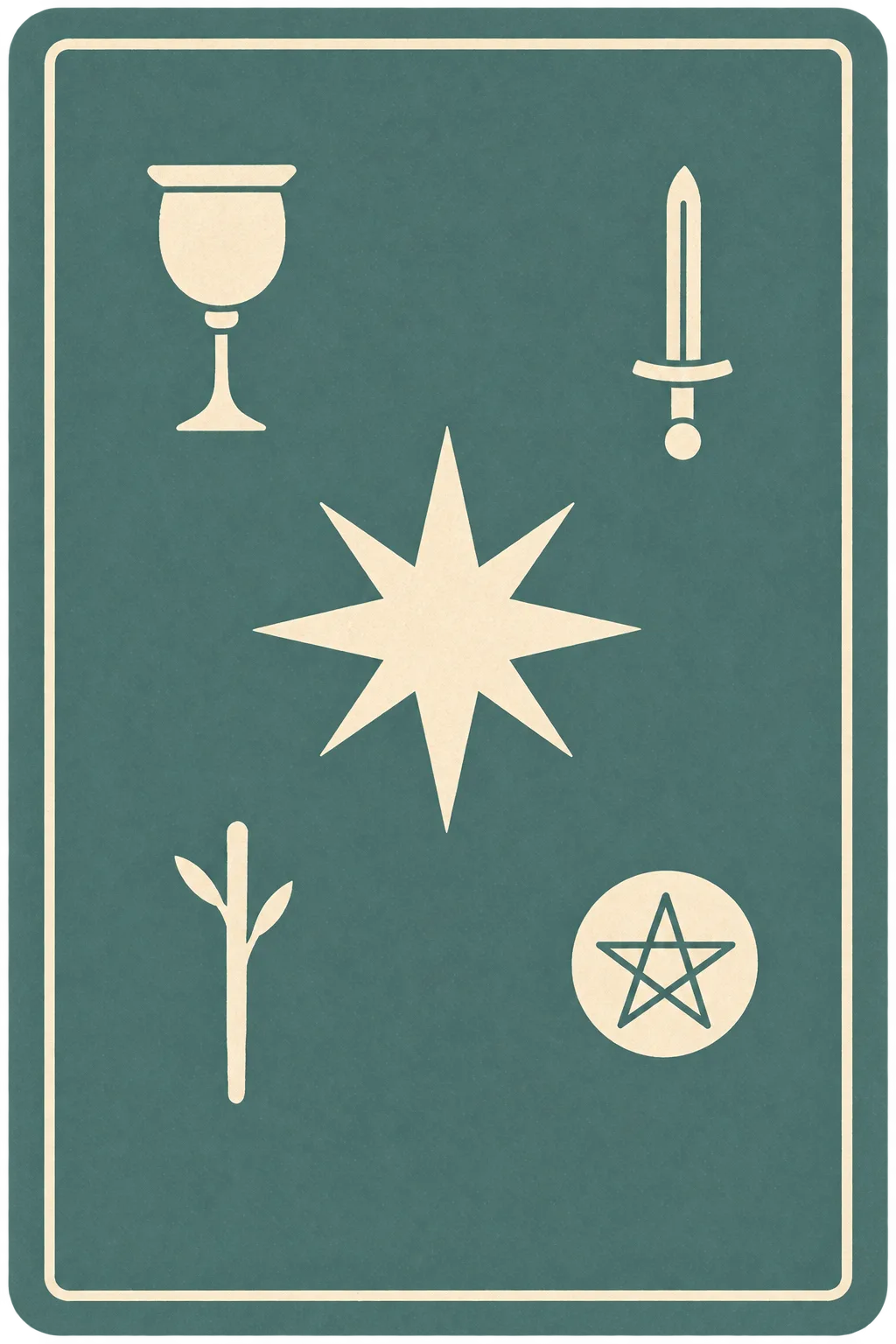
Its 56 cards are divided into four suits. Each suit contains an Ace, cards numbered Two through Ten, and four court cards.
Cups
Cups are associated with emotions, relationships, imagination, and connection. They may invite you to consider how you feel, what you need, or how you relate to others.
The Two of Cups, for example, is often connected with mutual exchange and partnership.
Wands
Wands are associated with creativity, enthusiasm, initiative, and ambition. They can bring questions of motivation and direction into focus.
The Ace of Wands is commonly read as a spark of inspiration or the possibility of a new undertaking.
Swords
Swords are associated with thought, communication, decisions, and conflict. They can prompt reflection on beliefs, difficult conversations, or competing perspectives.
The Two of Swords often introduces themes of indecision, tension, or pausing before making a choice.
Pentacles
Pentacles are associated with work, resources, practical responsibilities, and the material side of life. Some decks call this suit Coins.
The Eight of Pentacles, for example, is often linked with practice, attention, and developing a skill.
What Are Court Cards?
Each Minor Arcana suit includes four court cards: the Page, Knight, Queen, and King. Some decks use different titles.
Court cards can be interpreted as people, aspects of yourself, or ways of approaching a situation. They do not have to refer to someone of a particular age or gender.
A Queen of Swords might invite you to consider clear communication and thoughtful boundaries. A Knight of Wands could bring enthusiasm and momentum into focus, along with questions about how that energy is being directed.
The question and position help you decide which interpretation fits the reading.
How Do the Two Groups Work Together?
Major and Minor Arcana cards can add different layers to the same reading.
Imagine asking about starting a new project and drawing the Fool alongside the Eight of Pentacles. The Fool could introduce the broader theme of entering unfamiliar territory, while the Eight of Pentacles brings attention to the practice and steady effort involved.
Together, they might prompt a reflection such as: “I can give myself permission to begin while accepting that learning will take time.”
Neither group automatically overrides the other. A Minor Arcana card can be central to a reading, especially when your question concerns a specific everyday situation.
A Simple Way to Start Learning
When you draw a card, begin with three questions:
- Is it a Major or Minor Arcana card?
- What broad theme or suit does it introduce?
- How does that theme relate to my question?
Then look more closely at the image and consult your deck’s guidebook. This gives you a structure to work with while leaving room for the details that make each card-and each reading-different.